Cheesecloth is one of those humble kitchen tools that often gets overlooked until you desperately need it. This versatile, loosely woven cotton fabric is a staple for serious home cooks, bakers, cheesemakers, and even crafters. Far more than just a tool for making cheese, a high-quality cheesecloth can handle a surprising range of tasks, from straining stocks and bundling herbs to polishing silver and creating Halloween decorations.
What Exactly is Cheesecloth?
Traditionally, cheesecloth is a lightweight, gauzy cotton fabric with an open weave. Its name comes from its primary historical use: draining whey from curds during the cheesemaking process. The weave allows liquids to pass through while trapping solids. Today, it's manufactured in various "grades" which indicate the thread count and tightness of the weave. The grade number is inversely related to the tightness—a lower number like Grade 10 is very open and coarse, while a Grade 100 cheesecloth is ultra-fine and dense.
Key Uses for Cheesecloth in Your Kitchen
The applications for this simple fabric are nearly endless. Here are some of the most popular uses:
1. Straining and Clarifying
This is its classic role. Use it to strain yogurt to make Greek yogurt or labneh, separate curds from whey in homemade cheese, clarify butter into ghee, or make crystal-clear broths and consommés. For these fine straining jobs, you'll want a tighter weave. Products like the Cotton Farm Grade 100 XL Cheese Cloth are specifically designed as ultra-dense butter muslin for these precise tasks.
2. Cooking and Baking
Cheesecloth is invaluable for creating bouquet garni (herb bundles) for soups and stews, wrapping whole spices for easy removal, or creating a pouch for mulling spices in cider or wine. It's also traditionally used to wrap and roast a turkey or chicken to keep the breast meat moist, a technique where a cooking turkey with cheesecloth soaked in butter works wonders.
3. Juicing and Nut Milks
For making fresh nut milks like almond or cashew milk, or for extracting the last bits of juice from pulpy fruits, a sturdy, reusable cheesecloth is perfect. It's far more effective than a standard sieve for these juice straining applications.
4. Crafts and Beyond
Its utility extends outside the kitchen. Cheesecloth is popular for Halloween ghost decorations, as a base for papier-mâché, for polishing and buffing, and even in gardening as a protective cover for plants. A multi-pack like the 12Pcs Reusable Cheese Cloths is ideal for craft projects, providing plenty of material to work with.
Choosing the Right Cheesecloth: A Buyer's Guide
Not all cheesecloths are created equal. Here’s what to look for when selecting one, as detailed in our comprehensive Cheesecloth Guide: Uses, Types & How to Choose the Best Fabric.
1. Understand the Grades
This is the most important factor. Grades range from 10 to 100. Grade 10-40 is good for bundling herbs or covering food. Grade 50-60 is a good all-purpose choice for general straining. Grade 80-90 is finer, excellent for making yogurt and nut milks. Grade 100 is the finest, often called "butter muslin," and is essential for tasks where you need to trap very fine particles, like clarifying butter or making soft cheeses. Most products for serious culinary use, like the 6-Pack Beige Cheesecloth, 20x20 Inch, specify they are Grade 100.
2. Material Matters: Bleached vs. Unbleached
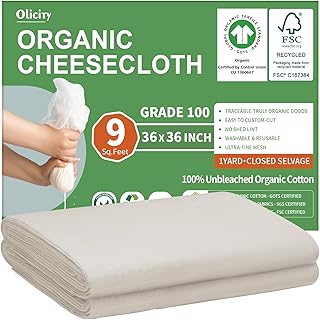
You'll find both bleached (white) and unbleached (natural beige) options. Unbleached cotton is generally preferred for food grade cheesecloth as it hasn't been treated with chemicals. It's the purest choice for direct food contact. The Organic Cheese Cloths, GOTS Certified take this a step further with organic certification. Bleached cheesecloth, like the GoodCook Everyday 100% Cotton Cheesecloth, is often brighter and may have a slightly stiffer feel initially but is perfectly safe for food use.
3. Size, Hemming, and Reusability
Consider the size you need. Larger pieces (36x36 inches) are versatile and can be cut down. Precut squares (like 20x20 or 15x15 inches) offer convenience. Look for hemmed or finished edges. Raw edges fray terribly, making the cloth messy and shortening its life. Hemmed edges, as found on the 6 Pcs Cheese Cloths with Hemmed Edge, are a sign of quality and make the cloth truly reusable. A good cotton cheesecloth can be washed and reused many times.
4. Brand and Quality
While generic cheesecloth can be found in many stores, dedicated culinary brands often offer better quality control, consistent weave, and food-safe assurances. For a reliable, no-frills option, the MAJESTIC CHEF Natural Cheesecloth is a trusted choice for many home cooks, as explored in our hands-on review.
Caring for Your Cheesecloth
To get the most out of your investment, proper care is key. After use, rinse it immediately in cold water to remove food particles. For stubborn stains or odors, soak it in a solution of baking soda and water. Hand-wash or machine wash on a gentle cycle with mild detergent. Avoid fabric softener, as it can coat the fibers and reduce absorbency. Always air dry; the dryer can cause excessive shrinkage and fraying. With proper care, a high-quality cheesecloth like the High-Grade 100 Cheesecloth 6-Pack can last for dozens of uses.
In conclusion, having a few squares of quality cheesecloth in your cheesemaking supplies or kitchen drawer unlocks a world of culinary and creative possibilities. Whether you opt for a versatile multi-pack, a large sheet of organic fabric, or a trusted brand name, choosing the right grade and features will ensure this simple tool performs flawlessly for all your straining, cooking, and crafting needs.